Pressure cooking uses a sealed pot to build steam pressure, which cooks food much faster than an open pot and, with the right equipment and tested recipes, lets you preserve food safely at home. YourPressureCooker.com helps beginners do both: make quick, nutritious meals, and learn canning for long-term food storage.
What is pressure cooking, and why start here?
Pressure cooking is cooking food in a locked pot where trapped steam raises the pressure and the temperature inside. Food cooks faster than it would in a pot with the lid resting on top. Tough cuts of meat soften, dried beans cook without a long soak, and soups and stews come together in a fraction of the usual time.
For a beginner, that speed is the main draw. A pressure cooker can turn basic ingredients into a hot meal on a weeknight when you have little time to stand at the stove. It also keeps cooking simple: one pot, a lid, and a handful of settings or a stovetop dial to learn.
This site is built for people who are new to all of this. If you have never sealed a lid on a pot or filled a canning jar, you are in the right place.
What can you cook in a pressure cooker on a busy night?
You can cook most of the foods that normally take a long time on the stove or in the oven. These are the ones beginners tend to try first:
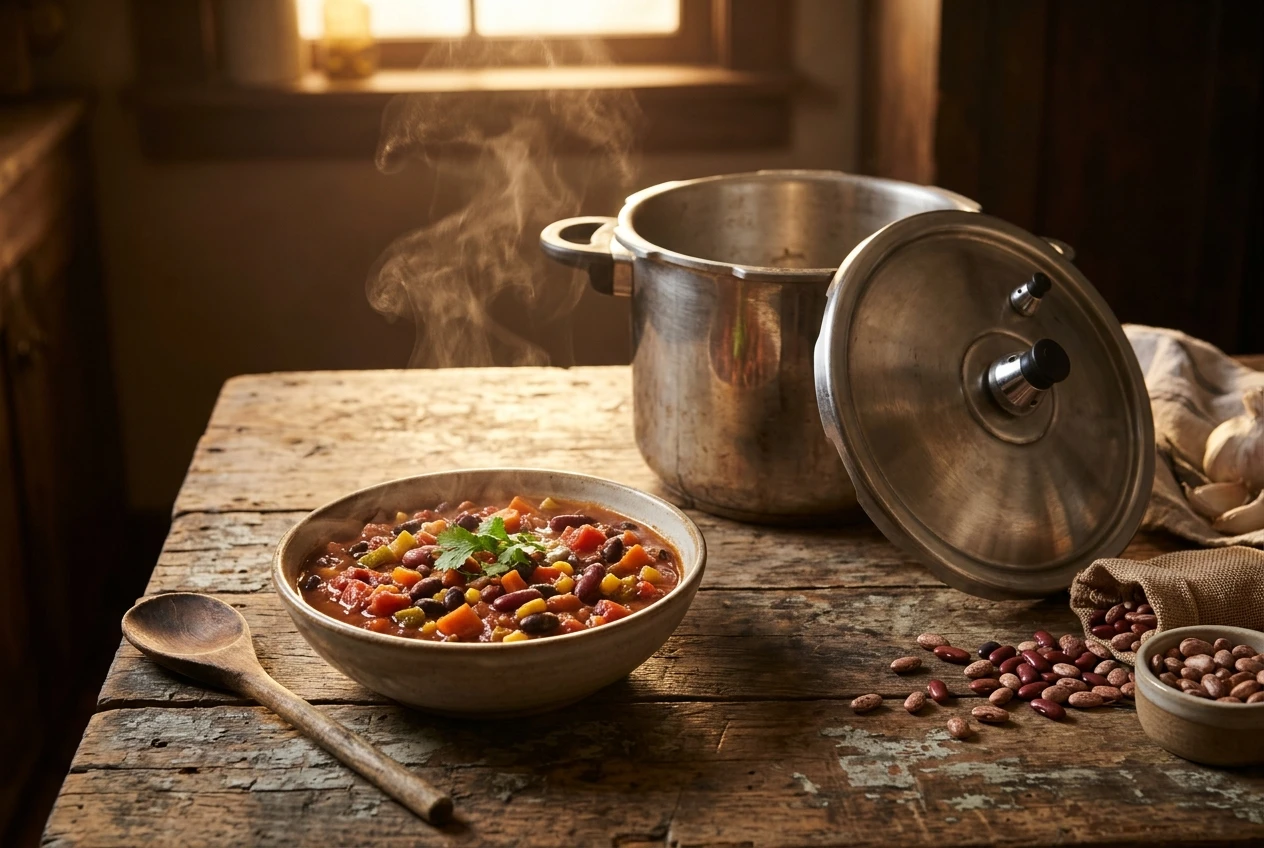
- Dried beans and lentils
- Soups and stews
- Rice and other whole grains
- Chili and pasta sauces
- Tougher cuts of meat, such as roasts and ribs
- Whole potatoes and root vegetables
Meals like these are also easy to make nutritious. You choose the ingredients, and the sealed pot keeps the cooking liquid in the dish rather than letting it boil away. Beans, vegetables and lean proteins all work well, and a big batch of soup or chili gives you lunches for the next few days.
The quick meal pages on this site are written for first-timers. They cover what to put in the pot, how much liquid it needs, and how to release the pressure when the cooking is done.
Is a pressure cooker the same as a pressure canner?
No. A pressure cooker is made for cooking meals, and a pressure canner is made for preserving food in jars. The two can look alike, but they are designed and tested for different jobs.
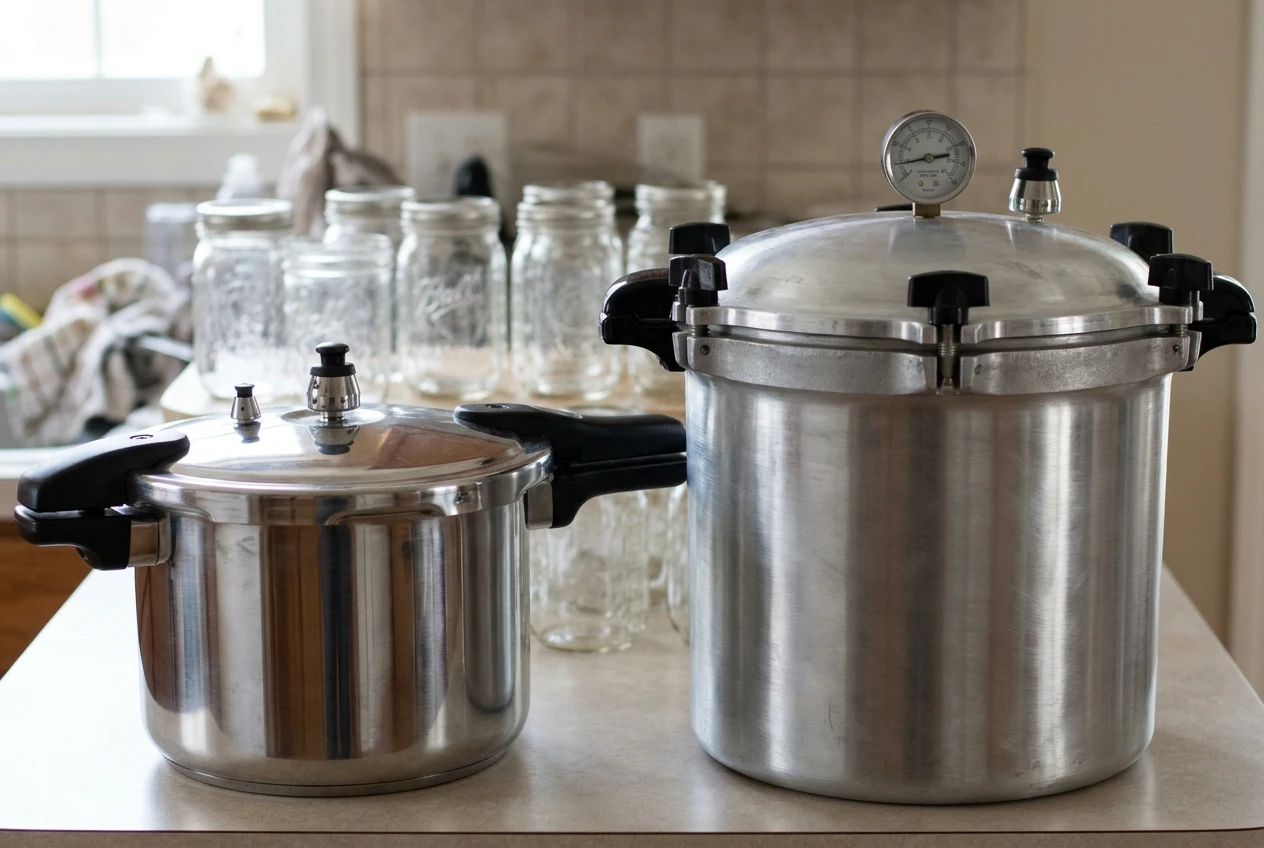
This matters because home canning safety depends on using the right equipment and following a tested recipe exactly. Many electric multi-cookers are sold as pressure cookers and are not designed or tested for canning jars. Before you can anything, read the manual for your appliance and check what the manufacturer says it is made for.
When you are ready to buy a canner, choose one made for home canning and follow its instructions. For recipes and processing guidance, rely on tested sources such as the USDA and the National Center for Home Food Preservation rather than a recipe from an unknown source.
Can a beginner learn home canning?
Yes. Canning is a set of repeatable steps, and beginners learn it by following tested directions closely and starting with simple recipes. The skill is in being careful and consistent, not in being experienced.
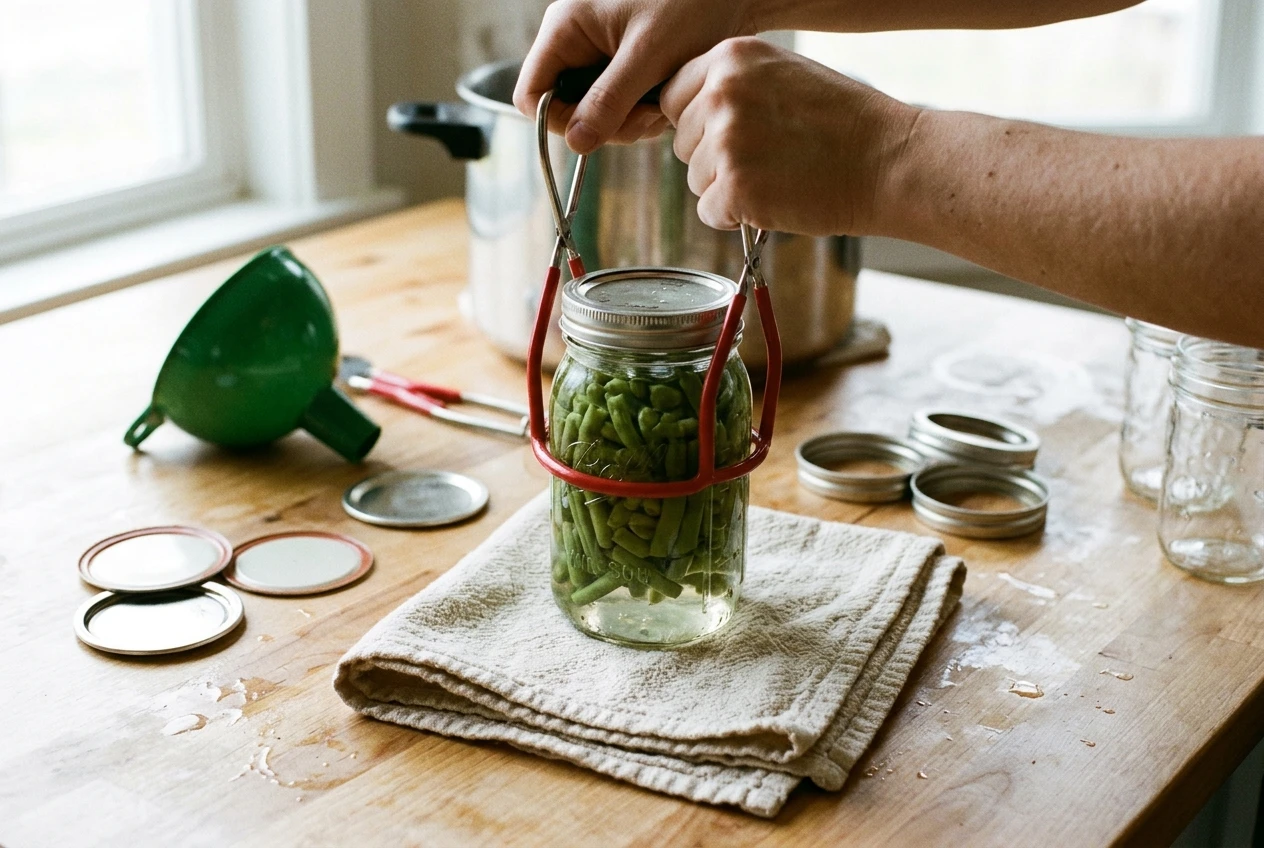
A first canning session usually goes like this:
- Choose a tested recipe from a trusted source.
- Check your jars, lids and bands, and wash everything.
- Prepare the food exactly as the recipe says.
- Fill the jars, leaving the headspace the recipe calls for.
- Process the jars using the method and time the recipe specifies.
- Let the jars cool undisturbed, then check that each lid has sealed.
- Label the jars and store them.
Each of those steps matters. Skipping or changing one, such as using a different jar size than the recipe lists, can make the result unsafe. When you are unsure, stay with the tested instructions.
Which canning method does each food need?
The method depends on how acidic the food is. High-acid foods can be processed in a boiling water bath, and low-acid foods need a pressure canner. This is the most important rule in home canning, and it is the first thing to check when you pick a recipe.
Food type | Common examples | Method |
|---|---|---|
High-acid foods | Most fruits, jams, jellies, pickles | Boiling water bath |
Low-acid foods | Plain vegetables, meat, poultry, fish, soups, stocks | Pressure canner |
Some recipes, such as tomatoes, depend on the exact ingredients and added acid. A tested recipe tells you what to add and how to process it. Do not guess, and do not swap ingredients in a canning recipe without confirming the change is approved.
This is why pressure canning is such an important skill for anyone who wants to store meals, meats and garden vegetables for the long term. It is the method that suits foods that a boiling water bath cannot handle safely.
What equipment do you need to get started?
You need less than you might expect. Which items you need depends on whether you are cooking meals, canning, or both.
For quick meals:
- A pressure cooker, either electric or stovetop
- The manual that came with it
- A heat-safe spoon and a good set of oven mitts
For canning:
- A canner suited to the method your recipe calls for: a boiling water canner for high-acid foods, or a pressure canner for low-acid foods
- Canning jars with new lids and matching bands
- A jar lifter, a funnel and a tool for measuring headspace
- A tested recipe and a reliable timer
Buy equipment that fits how you plan to cook. If you mainly want quick dinners, start with a pressure cooker and leave canning gear for later. If your goal is to preserve food from the garden or the grocery store, choose a canner designed for it.
How do you stay safe while pressure cooking?
Safe pressure cooking comes down to a few habits, and they are easy to build. Make them routine from the first day.
- Read the manual before the first use, and keep it where you can find it.
- Check that the sealing ring and vent are clean and in place before you lock the lid.
- Never fill the pot beyond the maximum line, especially with foods that foam or expand, such as beans, rice and grains.
- Never force a lid open. Release the pressure as the manual describes, and open the lid only when it is fully released.
- Keep your face and hands away from the steam vent when releasing pressure.
- For canning, use a tested recipe and follow every instruction without changes.
If something in a recipe looks different from your manual, follow the manual for your appliance. Manufacturers know their own designs, and a recipe cannot account for every model.
How is this site organized for beginners?
The site has two paths, and you can follow either one or both. Each path starts with the basics, so you do not need to know anything first.
Quick pressure cooker meals. This path is for you if you want dinner on the table faster. Look here for simple recipes, tips on liquid and timing, and advice on getting a good result from your first few pots of food.
Canning and food storage. This path is for you if you want to preserve food and build a pantry. You will find guidance on choosing between a boiling water bath and a pressure canner, the equipment each one needs, and how to work through your first jars safely.
Many readers find that the two paths support each other. A pressure cooker teaches you how steam, pressure and timing behave, and canning builds on that same respect for process. If you want to know more about who is behind the site and why it exists, visit the About page.
What should you do first?
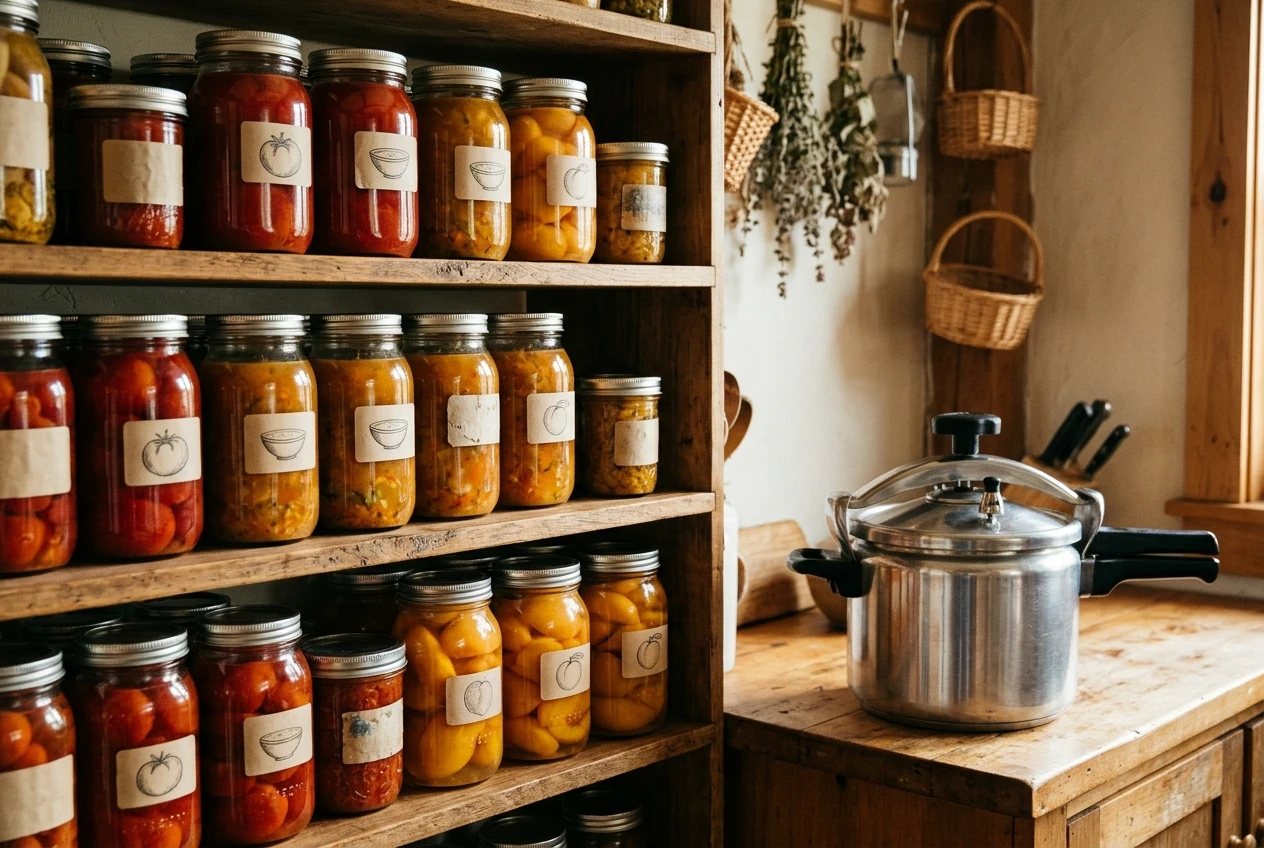
Pick the goal that matters most to you this week. If it is dinner, choose a simple recipe such as a soup or a pot of beans, and read your cooker’s manual before you start. If it is canning, decide whether your first recipe is high-acid or low-acid, and confirm you have the matching canner.
Start small, follow the directions as written, and keep your first batch modest. Once the first pot or the first jars come out well, the next one is easier, and pressure cooking becomes a regular part of how you feed your household.