Water bath canning vs pressure canning: which one should you use?
Water bath canning vs pressure canning comes down to acidity. Use a water bath canner for high-acid foods such as most fruits, jams and properly acidified pickles. Use a pressure canner for low-acid foods such as plain vegetables, meats, beans, soups and stock. Check the recipe first, because the food decides the method, not your preference.
Which should you use: water bath canning or pressure canning?
Use whichever method your tested recipe calls for, and the recipe will call for one based on how acidic the food is. High-acid foods go in a water bath canner. Low-acid foods go in a pressure canner.
That is the whole decision. You do not need to weigh cost, convenience or how much time you have, because the method is a safety requirement. If a recipe does not say which method to use, it is not a recipe to trust for canning.
Choose recipes from tested sources, such as the USDA or your state’s extension service. Follow them exactly, including the jar sizes, headspace and processing times they list.
How do the two methods actually differ?
The two methods differ in how hot the inside of the jar gets. A water bath canner heats jars in boiling water, and a pressure canner heats them with steam under pressure, which reaches a higher temperature than boiling water can.
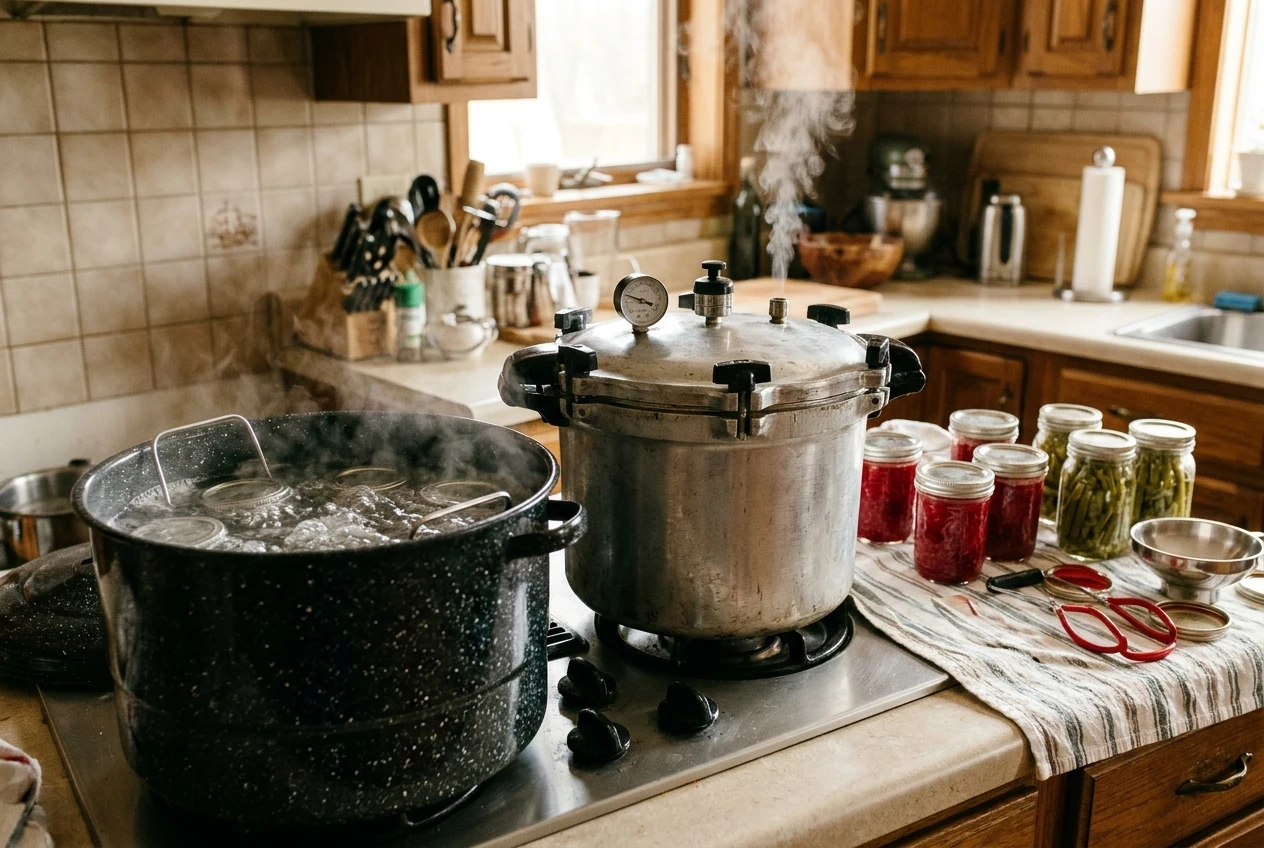
That higher temperature matters because of what is being destroyed. Boiling water is hot enough to handle the yeasts, molds and bacteria that struggle in acidic foods. It is not hot enough to reliably destroy the spores of the bacterium that causes botulism, which can survive in low-acid food sealed in a jar.
Here is how the two compare side by side:
| Water bath canning | Pressure canning |
|---|---|---|
Best for | High-acid foods | Low-acid foods |
Heat source | Boiling water around the jars | Steam under pressure |
Typical foods | Fruit, jams, jellies, pickles, acidified tomatoes | Plain vegetables, meat, poultry, fish, beans, soups, stock |
Equipment | Large pot with a lid and a rack | A canner built for pressure canning |
Learning curve | Gentle | Steeper, but very doable |
Is your food high-acid or low-acid?
Ask one question of every recipe: is this food high-acid or low-acid? Acidity is what keeps dangerous bacteria from growing in a sealed jar, so it decides which canner you need.
Naturally acidic foods, like most fruits, are high-acid. Most vegetables, meats and fish are low-acid. Some foods start out low-acid and become high-acid because of what you add to them. Pickles are the clearest example: the vinegar in a tested pickle recipe is what makes them safe for a water bath canner.
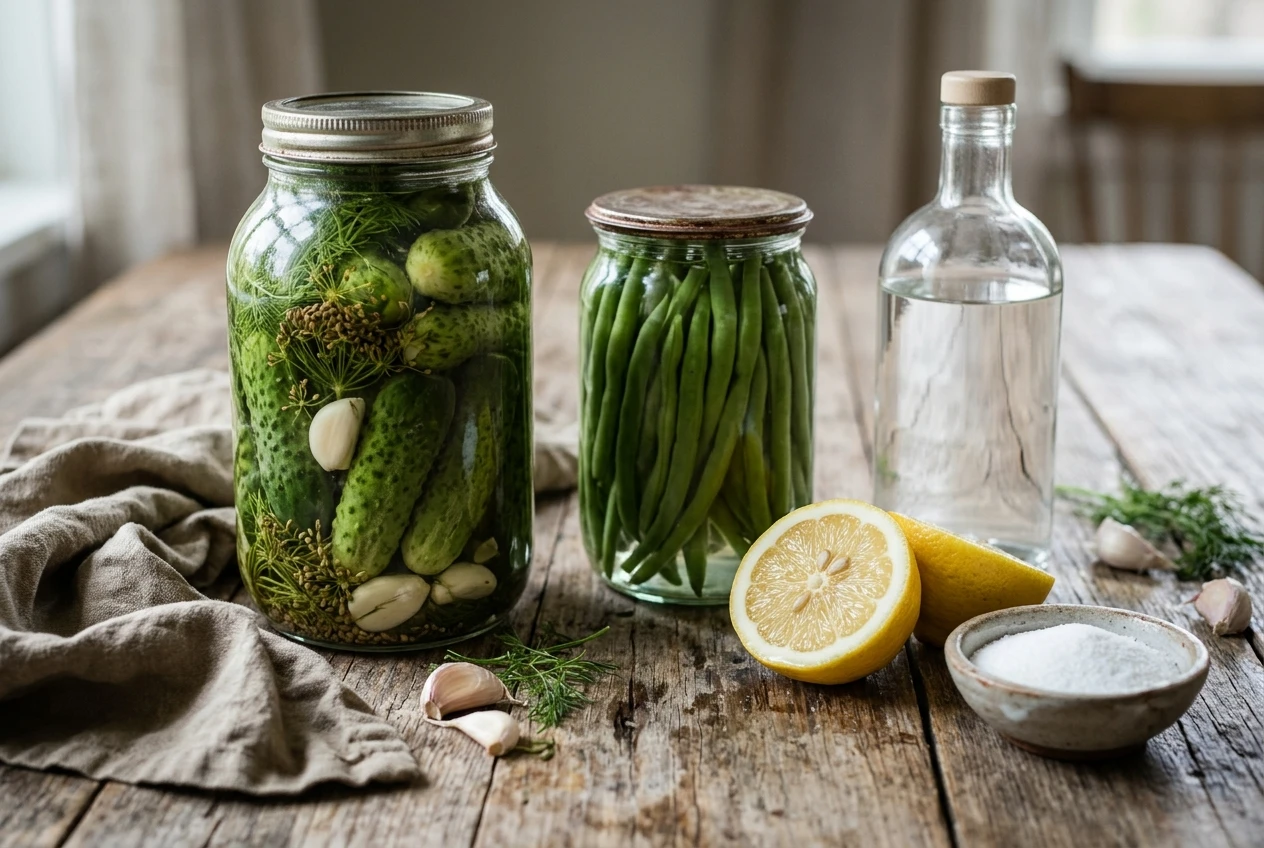
That is also why you should never change the ratio of vinegar, lemon juice or citric acid in a tested recipe. Swapping in more vegetables or less vinegar changes the acidity, and the processing method no longer matches the food.
A quick way to sort a recipe:
- Look at the main ingredient. Is it a fruit or a pickled item, or a plain vegetable, meat or bean?
- Check for added acid. Does the tested recipe call for vinegar, lemon juice or citric acid?
- Check for low-acid add-ins. Did someone mix onions, peppers, meat or beans into something that would otherwise be acidic?
- Follow the method the tested recipe names.
Which foods belong in a water bath canner, and which need a pressure canner?
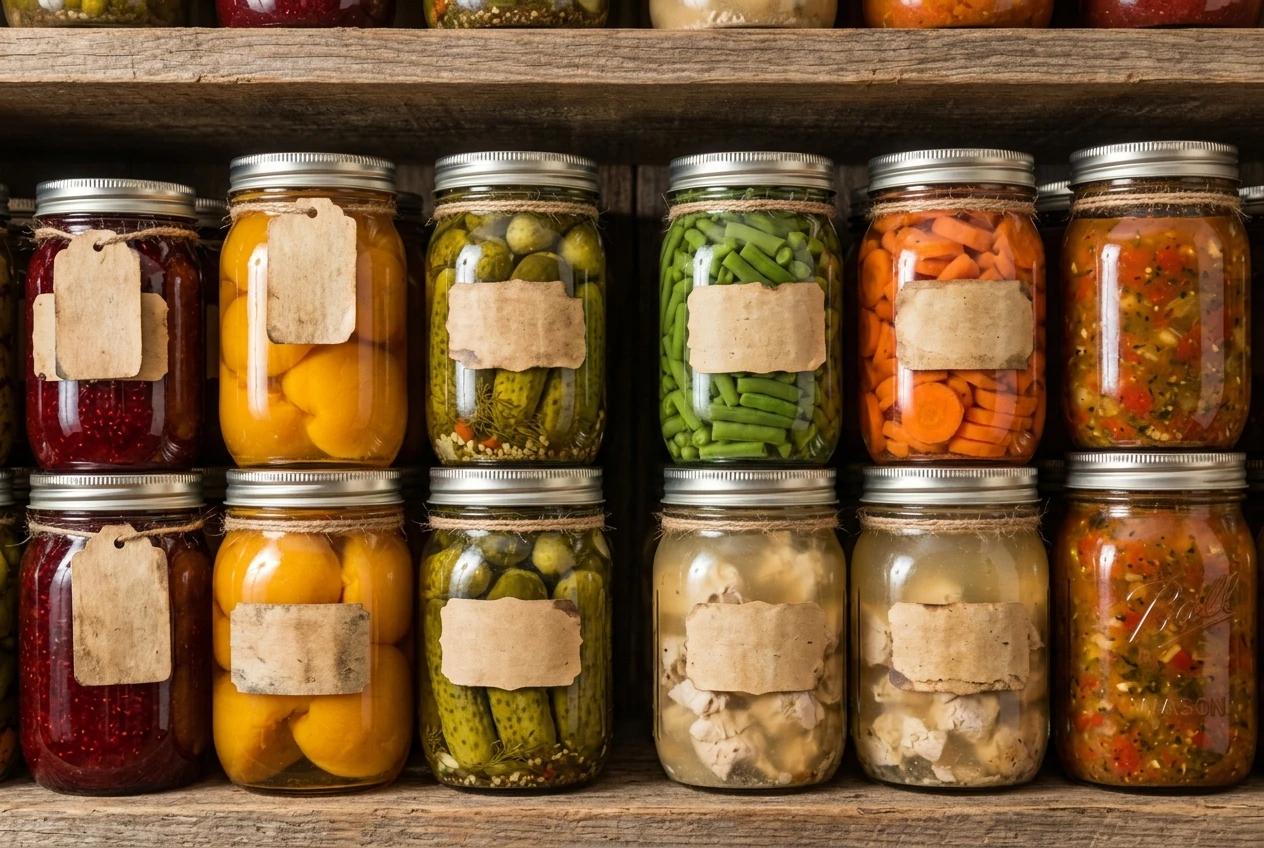
High-acid foods belong in a water bath canner, and low-acid foods need a pressure canner. Here are common home-canning foods sorted by method.
Foods for a water bath canner
- Most fruits, such as peaches, pears, apples and berries
- Jams, jellies and marmalades
- Fruit juices and fruit sauces
- Pickles made with a tested vinegar-based recipe
- Relishes and chutneys from tested recipes
- Tomatoes, when the tested recipe includes the added acid it calls for
Foods for a pressure canner
- Plain vegetables, such as green beans, corn, carrots, potatoes and peas
- Beef, pork, chicken and other meats
- Fish
- Dried beans and other legumes
- Soups, stews and stock
- Any mixture that combines low-acid ingredients, such as a vegetable soup or tomato sauce with meat
The in-between foods
Tomatoes and salsa are where beginners most often get confused. Tomatoes are borderline, so a tested recipe will tell you exactly how much lemon juice or citric acid to add, and which method to use. Salsa and tomato sauces depend on everything else in the jar, because peppers, onions and meat are low-acid and change the picture.
For these foods, do not go by memory or by a recipe someone shared without a source. Find a tested recipe for the exact thing you are making and follow it as written.
What equipment does each method need?
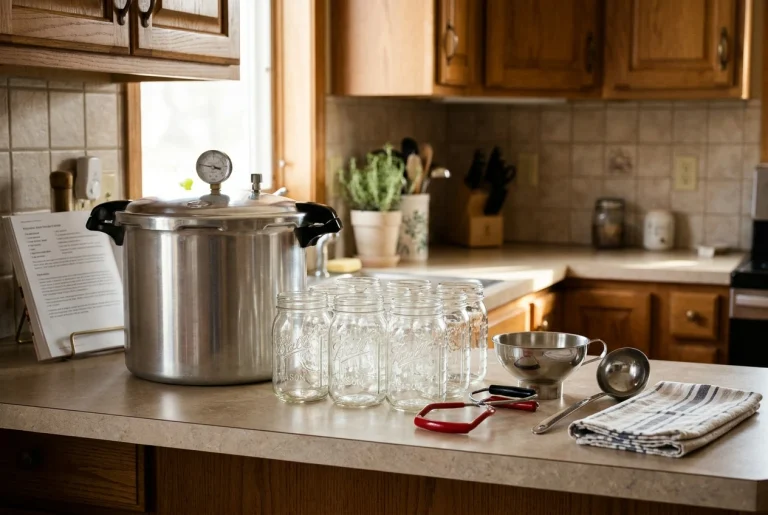
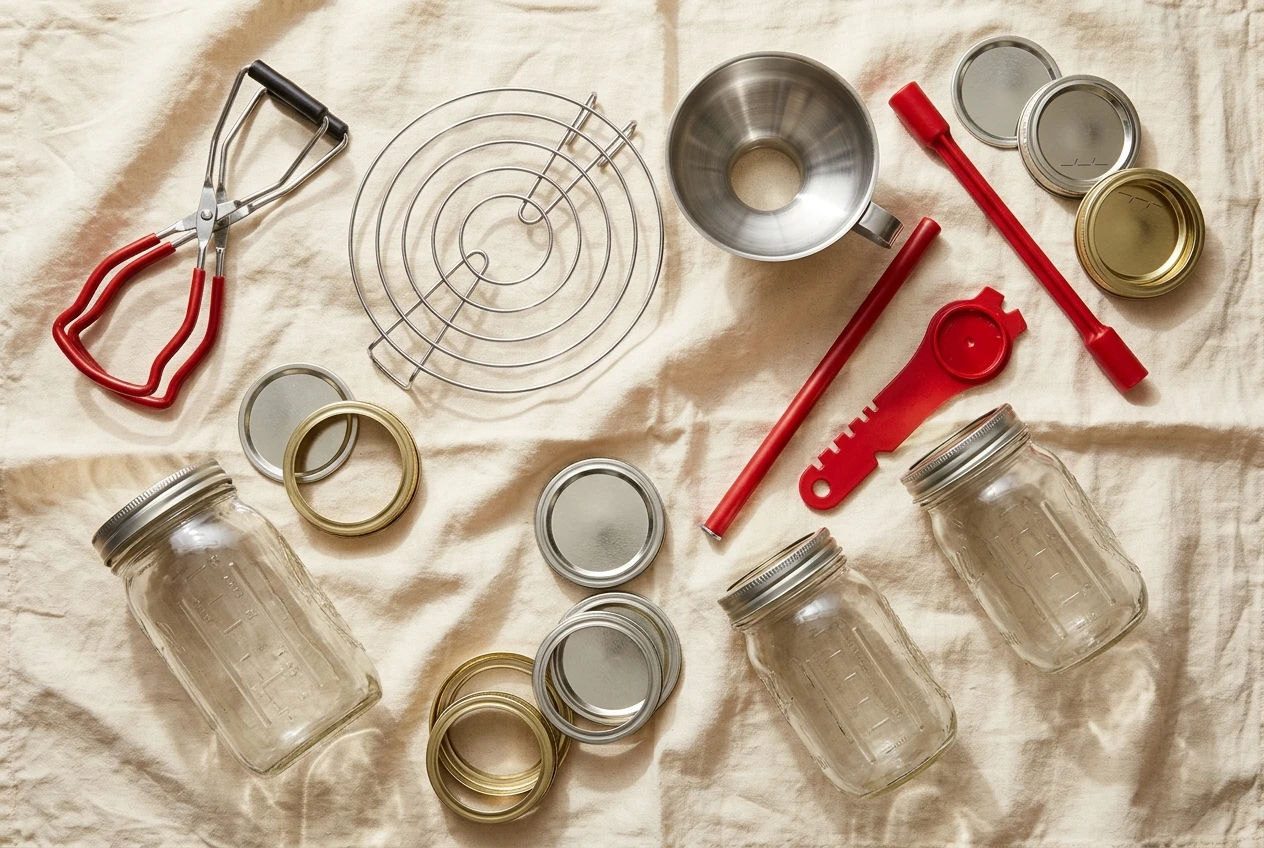
A water bath canner needs very little: a large, deep pot with a lid, a rack that keeps jars off the bottom, and a jar lifter. The pot must be tall enough that the water can cover the jars by the amount your recipe specifies. Beyond that you need jars, new lids and bands, and a few small tools for filling and wiping jars. If you are still choosing jars, the canning jars and lids beginner’s buying guide covers what to look for.
A pressure canner is a different piece of equipment from the pressure cooker you use for weeknight meals. A canner is made and tested for processing jars, and it comes with instructions for gauges, venting and cooling. Do not assume that a pressure cooker or multicooker can safely do canning. Check what the manufacturer says about canning, and follow tested guidance for your specific model.
The practical difference for a beginner:
- Water bath canning can start with a pot you may already own, plus a rack and jar lifter.
- Pressure canning requires buying a canner designed for the job, and a little more time learning how to use it.
Why can’t you just water bath can low-acid foods?
You cannot water bath can low-acid foods because boiling water does not get hot enough to make them safe. Low-acid food sealed in a jar gives botulism spores a place to grow, and the toxin they produce can make you seriously ill.
The danger is easy to miss. Food contaminated this way can look, smell and taste normal. The sealed lid and the lack of any warning signs make it feel safe when it is not.
This is why you should not trust:
- Old family recipes that call for boiling green beans or meat in a water bath
- Online recipes with no tested source behind them
- The idea that “we’ve always done it this way and nobody got sick”
A pressure canner exists to solve this one problem. It reaches a temperature that boiling water cannot, and tested processing times are built around that. If you want to can low-acid food, use a pressure canner and a tested recipe.
How do you choose if you want to can a bit of everything?
If you want to can both fruit and vegetables, start with the method that matches the first food you plan to preserve, then add the other when you are ready. Many home canners end up with both canners over time.
A sensible way to decide:
- List what you want to can. Write down the five or six foods you would use most, such as jam, pickles, green beans, soup or chicken stock.
- Sort each one as high-acid or low-acid. Use the lists above and check each against a tested recipe.
- Count how many fall on each side. If nearly everything is high-acid, a water bath canner covers you. If much of your list is low-acid, plan on a pressure canner.
- Begin with the easier method if you are unsure. Water bath canning is a gentle place to build skills like filling jars, adjusting headspace and removing air bubbles.
- Add the pressure canner when you are ready. Soups, stocks, beans and plain vegetables all depend on it.
If your list leans toward meals-in-a-jar, such as soup, stew and meat, the pressure canner is not optional. It is the only safe route for those foods.
What should you do next once you’ve picked your method?
Once you’ve picked your method, gather a tested recipe for your first food, the equipment that recipe requires, and enough time to work without rushing. Read the recipe all the way through before you start.
For a water bath first batch, a simple fruit jam or a tested pickle recipe is a good choice. For a pressure canning first batch, a plain vegetable such as green beans in a tested recipe is a common starting point. Work with the right jar size and fresh lids, and keep your workspace clear.
Canning rewards care. Use tested recipes, follow the method they name, and do not improvise with acid, ingredients or processing times. That is what keeps your shelf-stable food safe to eat.
Ready to try the pressure side? Read Your first pressure canning day, step by step, and see What You Need to Start Pressure Canning at Home as a Beginner for the equipment list.